.png)
Articles

The New American Jew
Jewish Journal
August 15, 2018
The Jewish community is undergoing a fundamental revolution, resulting in the emergence of a new kind of American Jew. The traditional 20th century communal system was constructed around the centrality of a federation-synagogue partnership. Today, we find an emergent 21st-century framework reflective of the rise of boutique organizations and alternative expressions of Jewish participation. The peer-networked leadership model, a central attribute of the last century, has given way to a framework of self-selected, empowered leaders.

The Alt Right Returns
eJewish Philanthropy
July 31, 2018
A year ago, our nation was introduced to “unite the right” when they gathered in Charlottesville. This August, the alt right is intending to be back! What did we learn from that encounter and how do we prepare for their return? In June of this year, the National Park Service approved a permit request from Jason Kessler associated with the alt right movement for a “white civil rights rally” to be held in Lafayette Park, across from the White House, on Sunday, August 12th.[1] The alt right website has set the date and time for this gathering.

Remembering Richard Siegel (z”l)
eJewish Philanthropy
July 16, 2018
Richard Siegel reflected a quiet demeanor but there was nothing passive about his intellect or his passion. His interests were broad and impressive, serving as a reflection of his deep and abiding beliefs concerning Jewish life and his love of Jewish culture and tradition. He has been described as a man of profound modesty and one who was insightful, patient, and measured. One can describe Richard through the lens of his formal titles and positions but also through the legacy of the fullness of his contributions and the impact of his personal journey. In this memorial, we will attempt to tell these two defining stories that reflect both of these striking dimensions of this man.

A Deep Dive into Jewish L.A.
Jewish Journal
June 27, 2018
Los Angeles’ Jewish community comprises a landscape of choices and creative experiences. How did this unique Jewish story evolve and what might this mean for L.A. Jewry in the 21st century? Beginning with the arrival of the first Jews in Los Angeles in the 1840s and the formation of their first institutions a decade later, including the Hebrew Benevolent Society (now Jewish Family Services), Jews would play prominent roles in the civic, economic and cultural life of the city. By the post-World War II era in the 1940s, Los Angeles’ Jewish population had evolved from a marginal community to a center of Jewish influence and growth.

The Economic Performance of Jewish Organizations: Insights and Reflections
eJewish Philanthropy
June 24, 2018
The economic performance of Jewish institutions across the sector provide us with some important insights: a. “Reputation” plays an important role in the success of an organization to consistently raise funds. Among older constituencies of donors, this factor must be viewed as particularly significant. Legacy institutions play to their long-standing relationship with their key donor pool. b. “Leadership” must be seen as a critical ingredient.
Jeffersonian vs. Jacksonian Jews: Revisiting Jewish Political Behavior in the 21st Century
Jewish Journal
June 20, 2018
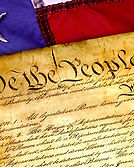
The 19th-century contest between Thomas Jefferson’s prescription for America and that of Andrew Jackson’s populist ideas are being played out today in this nation’s politics. In some measure, Donald Trump’s rise to political prominence can be tied to the populism identified with Andrew Jackson’s vision for America. By contrast, Barack Obama’s presidency symbolized a globalist perspective, one that more appropriately could be aligned with aspects of Jefferson’s view of what America ought to become.

Why L.A. Needs to Bring Back the JCRC
Jewish Journal
June 7, 2018
In 1933, with the rise of anti-Semitism in this country and the emergence of Nazi influence in this city’s film industry, the Jewish Community Committee (later, the Community Relations Committee) was formed. Dramatically portrayed by USC historian Steven Ross in his recent book, “Hitler in Los Angeles,” the JCRC has operated as an essential civic instrument in this community for more than six decades. What’s in a name? While the CRC remained the official acronym of this Los Angeles entity for much of its existence, across the country, community relations entities were pressed to demonstrate their “Jewish” credentials, both in terms of policy and practice.

Managing in an Age of Anger and Fear: How We Engage Around Israel
eJewish Philanthropy
June 6, 2018
Wherever one turns today, on email or twitter accounts, whether in letters to the editor or postings to articles, or responses to guest presenters, there appears to be a litmus test concerning Israel. Increasingly, one finds names showing up on “lists.” Some of these postings are seen as the “correct” listserv, while others are identified as being a part of an “enemies” list. Have we created within the Jewish world a political mindset similar to what we experienced in the age of McCarthyism? Are we employing the very same measures introduced in the 1950s to determine if someone was a Communist?

Responding to Anti-Semitism: Revisiting Old Assumptions, Understanding the New Threats
Jewish Journal
May 23, 2018
A renewed assault on Jews is now underway. The incidents of anti-Semitism are again on the increase. The forces that today are driving hatred in America, and more directly, contemporary anti-Semitism and racism appear to be fundamentally different and the responses will likewise need to incorporate alternative approaches if we are to effectively succeed in minimizing religious bigotry and ethnic and racial prejudice. There exists a growing consensus that the political landscape in America is poisoned by the deep fissures found within the political culture.

Reinventing Liberal Judaism
Jewish Journal
May 9, 2018
The drop-off in congregational membership, the aging of mainstream religious supporters, and the corresponding rise in the number of nonpracticing Jews represent some of the striking indicators of a religious free-fall that today defines American Jewry. These demographic realities pose significant challenges to our respective liberal Jewish movements. In this post-modern world, it is time to reinvent liberal Judaism. Nor are these patterns of religious disengagement distinctive to American Jewry.