.png)
Articles

Experiencing Thanksgiving: Some Jewish Reflections
eJewish Philanthropy
November 24, 2019
There exists a Jewish backstory to Thanksgiving! In connection with this holiday, we can observe the alignment of national customs with Jewish values and practice, a pattern that marks the distinctiveness of American Jewish behavior. Unlike other holiday observances, Thanksgiving provides an opportunity for Jews to express their Americanism in consort with their Judaism. Over time this has taken different forms of expression.

Encounter in Moscow: One Moment in the Soviet Jewry Saga
eJewish Philanthropy
November 7, 2019
Thirty years ago this month the Berlin Wall fell, and with it we would see the demise of the Soviet Union. During my tenure as the director of Los Angeles JCRC (Jewish Community Relations Committee), the human rights campaign for Soviet Jewry represented a Jewish community priority. The JCRC’s Commission on Soviet Jewry regularly sent small groups to Russia to meet with Refuseniks involving those Jews who had requested the right to leave the Soviet Union but whose petitions had been denied. The cornerstone of this effort was built around religious freedom and the right of an individual to be free to emigrate.
In the Aftermath of the California Wildfires: What We Are Learning About our Community and Ourselves?
eJewish Philanthropy
November 5, 2019
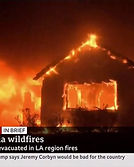
This past week alone, California experienced 9 wild fires, with more than 25,000 acres burned, 138 structures destroyed, and thousands of families and individuals displaced. As these fires raced across California, we witnessed a different communal paradigm. Disasters bring individuals and institutions into alignment! This pattern of collective action can be documented.[1] Few conditions, outside of such threats, create the level and depth of collaboration and institutional engagement.

The New American Jewish Gilded Age: Examining Wealth, Anti-Semitism, and More
eJewish Philanthropy
October 22, 2019
“The first Gilded Age saw massive wealth inequalities, hyper-partisanship, virulent anti-immigrant sentiment and growing concern about money in politics.”[1] It also witnessed a significant uptake in anti-Semitic behavior! Some American economists are defining this current period of affluence and growth as our nation’s “second gilded age.” The first “Gilded Age” followed the Civil War (1870-1900) and it would be marked by greed and corruption often at the expense of the working class. With the growing political influence of the business and industrial sector, the “Robber Barons” would employ their economic clout. Intimidation was used to exploit workers and to hold down wages. The economic divide of that era is being recreated in today’s American marketplace, as we are experiencing the most significant income inequality in this nation’s history.
Jews and their Politics: Unpacking a New Survey of Jewish Voters in Los Angeles
eJewish Philanthropy
October 10, 2019
This week, the Pat Brown Institute of California State University Los Angeles released its fourth study of ethnic group voting patterns. This latest survey focused on Jewish American voters, with the previous studies focusing on Asian American, Latino-American and African American voters in Los Angeles County. The study involved some 1800 registered LA County Jewish voters, making it one of the largest Jewish political studies in a major metropolitan area in recent years. It was designed to reflect the different sectors of the Jewish community by age, gender, religious observance, and ethnic-orientation.[1] This represented the first study of LA Jews since the 1997 Jewish Federation Population Study and was most likely the largest sampling ever undertaken examining this County’s Jewish political and voting patterns. Los Angeles is identified as the third largest Jewish population base in the world, outside of New York and Jerusalem, home to some 600,000 Jews.

Reflections on the New Year Rosh Hashanah 5780
eJewish Philanthropy
September 26, 2019
At this season of our renewal, these reflections are directed to my contemporaries and our generation of service and commitment to the Jewish people.[1] As we look back upon our lives and our work, a number of core beliefs defined our generation: For many of us the prophetic tradition provided us with the framework and inspiration for promoting a more equitable society. We envisioned our Judaism and our Americanism in consort with one another. We believed that each generation saw itself building upon the next. Finally, we held to the belief that anti-Semitism, especially in the United States, was relegated to another era. Today, the question may be whether any of these four assumptions are valid.

In This Time, at This Place: 5780
The Times of Israel
September 25, 2019
At this season of our renewal, as we seek to bring wholeness into our networks of relationships, we are encountering as a community a number of challenging concerns. Kehillah: How Do we Sustain and Engage our Fellow Jews? As we know, our society, and more pointedly the Jewish community, is living through a time of institutional realignment and leadership transition, yet some sociologists are suggesting that out of this experience we are likely to see “a return to community”. For Jews, such a “return” maybe tied to the rise of anti-Semitism and the sense of concern, even fear that may result. In recent times, I have suggested that we are witnessing “the end of community,” yet we always hold out the desire to see the rebirth of a shared commitment to Jewish peoplehood.

Some Reflections on the Hartman White Paper on Courageous Leadership Can We Manage the Divisions Among Us?
eJewish Philanthropy
September 23, 2019
The Hartman report is primarily a defensive strategy for leaders. Indeed, a noble effort, the White Paper is designed to provide our rabbis and communal professionals with the resources and supports essential for “leadering.” The authors are seeking to empower Jewish leaders in ways that can enhance their leadership performance, while seeking to defuse the tenor and intensity of the personal and institutional attacks that today mark the landscape of our community. Each of the scenarios introduced in the appendix sections of this report deal with one of the various intractable arenas that today defines the state of Jewish discourse.

Tough Questions for an Uncomfortable Moment in Time
eJewish Philanthropy
September 5, 2019
We are living with new realities. Each of these challenging and unsettling conditions is accompanied by a set of questions. Whether we are speaking about American democracy and anti-Semitism, the idea of “community,” the State of Israel, or the meaning of Judaism in the 21st century, we are living through a disruptive and complex moment in our Jewish journey. In this season of Elul, as part of our personal and collective reflections, may we also consider these compelling issues. Items 1 through 4 address different aspects of anti-Semitism: 1. We held to the proposition that America was different from any previous Diaspora experience for Jews.

Where we Were & Where we Need to Go: CRC 101 Laying out an American Jewish Public Policy Agenda
eJewish Philanthropy
August 27, 2019
At a time of increased social tension within our society and with a documented rise in anti-Semitic behavior, our national agencies and local JCRC’s will be challenged to represent the interests of our community. Elsewhere, I have written about the principles that undergird this field and now must be in the forefront of community relations planning.[1] Revisiting the Past: We are reminded that the first principle of Jewish community relations involved a commitment to Jewish security. In the early decades of its work, the CR field centered its activities on “prejudice reduction.” In order to achieve such an outcome in the 1930s, a series of educational initiatives were introduced targeting churches, schools, civic organizations, and business and labor groups in fostering intergroup understanding. In keeping with its core mandate, the field focused its attention to...